

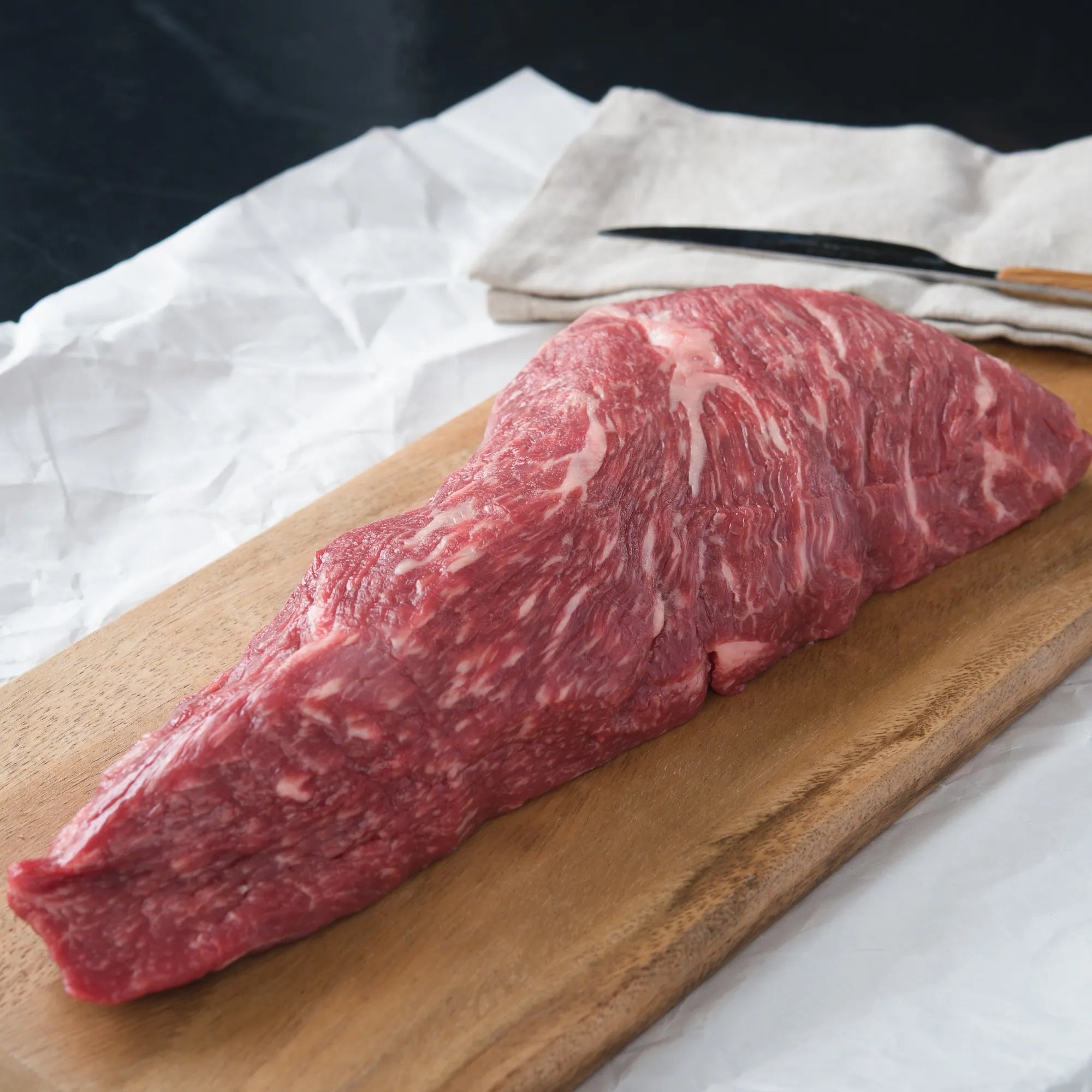
Tri-tip steak has earned a devoted following for good reason. This triangular, boneless cut comes from the bottom sirloin, delivers a bold beefy flavor, and cooks faster than most roasts of its size. Whether you're picking one up for the first time or looking to refine your technique, this guide covers the cut's origins, how to select it, how to prepare it, and how to cook it at home.
For step-by-step cooking instructions, check out Allen Brothers' full collection of cooking guides. If you want to start with an exceptional piece of beef, take a look at our Wagyu tri-tip.
Table of Contents
-
Where Does Tri-Tip Come From?
-
What Does Tri-Tip Taste Like?
-
How to Buy Tri-Tip Steak
-
How to Prepare Tri-Tip
-
How to Cook Tri-Tip Steak
-
Tri-Tip Cooking Tips
-
Frequently Asked Questions
-
Shop High-Quality Tri-Tip Steak From Allen Brothers
Where Does Tri-Tip Come From?
Tri-tip comes from the bottom sirloin, a section of the cow located just above the rear leg and below the main sirloin. The specific muscle is called the tensor fasciae latae. Because this muscle does relatively little work, the meat stays tender despite being a lean cut.
The name comes from the cut's shape. When butchers remove it from the bottom sirloin butt, it naturally forms a triangle with three distinct points. You'll also find it sold under the names Santa Maria steak, California cut, Newport steak, triangle roast, and bottom sirloin butt. All refer to the same cut.
One detail worth understanding before you cook is the fat cap, a thin layer of fat that runs along one side of the roast. You have two options:
-
Leave it on during cooking so it bastes the meat as it renders.
-
Trim it down to about a quarter inch for better seasoning contact and a cleaner sear.
Many pitmasters trim to a quarter inch as a middle ground. Either approach works, so choose based on your cooking method and personal preference.
To see where tri-tip fits among other cuts, read Allen Brothers' guide to beef cuts.
What Does Tri-Tip Taste Like?
Tri-tip steak delivers a full, pronounced beef flavor. The lean muscle structure keeps the taste clean and direct without the richness of a ribeye. Think of it as sitting between a New York strip and a flank steak in terms of both texture and flavor.
Is tri-tip steak tender? Yes, when you cook and slice it correctly. The muscle fibers are not especially long or coarse, which gives tri-tip a satisfying chew without toughness. Cook it to medium-rare, around 130 to 135 degrees Fahrenheit, and the meat stays juicy and yields easily to the knife.
Marbling plays a role in how fat distributes through each bite, but the grain of the meat matters just as much. Tri-tip has two grain directions that meet near the center of the roast. Slicing each half against its grain shortens the muscle fibers and makes every bite noticeably more tender. Ignore the grain and the same cut can feel tough. More on this in the cooking tips section.
How to Buy Tri-Tip Steak
A whole tri-tip roast typically weighs between 1.5 and 2.5 pounds, making it a practical option for a small dinner or for slicing across multiple meals during the week. When you're at the butcher counter, look for:
-
A deep cherry-red color with no gray or brown patches on the surface.
-
Visible marbling throughout the meat, even though this is a lean cut by nature.
-
A consistent thickness so the meat cooks evenly from end to end.
You'll find beef tri-tip sold two ways. A tri-tip roast is the whole muscle, either untrimmed or lightly trimmed, and gives you the most flexibility. Tri-tip steaks are the roast pre-sliced into individual portions, which cook faster and work well for weeknight meals.
Knowing how tri-tip compares to similar cuts helps you make a confident choice at the butcher:
-
Picanha comes from the top sirloin cap and carries a much thicker fat cap. It has a richer, fattier profile than tri-tip.
-
Brisket is larger and fattier and requires many hours of low-and-slow cooking. Tri-tip cooks in a fraction of that time.
-
Flank steak is thinner and wider, benefits from marinades, and works best over direct high heat rather than roasting.
Tri-tip sits between these cuts, offering the beefy depth of brisket with a much shorter cook time.
How to Prepare Tri-Tip
Preparation makes a measurable difference in the final result. Start by deciding how you want to handle the fat cap, then pat the surface dry with paper towels before seasoning. A dry surface forms a better crust once heat is applied.
Dry brining is one of the most effective ways to season this cut. Coat the tri-tip generously with kosher salt, and any other spices you plan to use, at least one hour before cooking. Overnight in the refrigerator uncovered gives the best results. The salt draws moisture to the surface, dissolves into it, and gets reabsorbed into the meat, seasoning it from within and setting the stage for a better crust.
Pull the tri-tip from the refrigerator 30 to 45 minutes before cooking. This brings the surface temperature up and helps the meat cook more evenly from edge to center.
For seasoning, the Santa Maria-style dry rub is the traditional starting point:
-
Kosher salt
-
Black pepper
-
Garlic powder
-
A pinch of cayenne or dried rosemary (optional)
This combination lets the beef flavor lead. You can also marinate tri-tip using olive oil, garlic, fresh herbs, and a small amount of acid, but a dry rub on a quality cut of beef rarely needs much more.
How to Cook Tri-Tip Steak
Tri-tip works well with several cooking methods. Here are three that produce consistent, quality results.
Reverse Sear
The reverse sear gives you the most control over doneness, especially with a thicker roast. Place the tri-tip in a 250-degree oven or on the indirect side of a two-zone grill. Cook until the internal temperature reaches 115 to 120 degrees, which takes roughly 45 minutes to an hour depending on size. Then sear it over high heat in a cast-iron skillet or over direct flame for 2 to 3 minutes per side until a crust forms. Pull it at 130 degrees for medium-rare or 140 degrees for medium.
Santa Maria Grilling
This is the method that made tri-tip famous in California in the 1950s. Set up a two-zone fire on your grill with direct high heat on one side and indirect heat on the other. Sear the tri-tip over direct heat for about 5 minutes per side to build a crust, then move it to the indirect side and cook until the thickest part reaches your target internal temperature. Oak wood is traditional for Santa Maria-style BBQ and adds a clean, savory smoke character.
Smoking Tri-Tip
Set your smoker to 225 to 250 degrees and use oak or hickory wood. Cook until the internal temperature reaches 125 to 130 degrees, then finish over high heat for a crust. The total cook time typically runs 60 to 90 minutes. Smoking adds depth to the beef flavor that works well with the cut's natural leanness.
Tri-Tip Cooking Tips
Getting the cook perfect comes down to three things: knowing when to pull it, how to slice it, and how to store what's left.
How to Tell When Tri-Tip Is Done
Use a meat thermometer every time. Insert it into the thickest part of the roast, away from any fat. Pull the tri-tip off the heat about 5 degrees before your target temperature because the internal temperature continues to rise while the meat rests.
Target temperatures:
-
Medium-rare: 130 to 135 degrees Fahrenheit
-
Medium: 140 to 145 degrees Fahrenheit
Cooking past medium makes the lean muscle dry out quickly. This cut does not have enough fat to stay juicy at higher temperatures.
How to Slice Tri-Tip Properly
Tri-tip has two grain directions that meet near the center. Cut the roast in half at the point where those two directions meet, then slice each half against its own grain. Thin slices, cut perpendicular to the muscle fibers, produce a tender bite. This single step has more impact on texture than almost anything else you do during cooking.
Always slice on a cutting board and let the meat rest for at least 10 minutes before you cut. Cutting too early causes the juices to run out onto the board rather than staying in the meat.
How to Store Tri-Tip
Cooked tri-tip keeps in the refrigerator for 3 to 4 days in a sealed container. To freeze it, wrap it tightly in plastic wrap, then in foil, or use a vacuum-seal bag. Stored this way, it keeps for up to 3 months. Thaw it overnight in the refrigerator and reheat gently in a low oven or warm skillet. Leftover slices work well in tacos, sandwiches, or alongside roasted vegetables and mashed potatoes.
Frequently Asked Questions
Is tri-tip a good cut of steak?
Tri-tip delivers strong beef flavor and genuine tenderness at a price that makes it one of the better values at the butcher counter. It grills, smokes, and roasts well, and a single roast feeds a group without much fuss. It earned its reputation in California BBQ, but its quality holds up at any level of cooking.
Can you overcook tri-tip?
Yes, and it happens fast because this is a lean cut. Past medium, the muscle fibers tighten and the meat loses moisture quickly. A meat thermometer takes the guesswork out of it. Aim for medium-rare to medium and rest the roast before slicing.
What's the best way to cook tri-tip steak?
The reverse sear gives you the most consistent results because you control the internal temperature precisely before applying high heat for a crust. If you want a more traditional approach, Santa Maria-style grilling over oak wood produces a crust and smoke character that suits this cut well. The method matters less than hitting the right internal temperature and slicing against the grain.
Why is tri-tip harder to find outside California?
For decades, tri-tip was a regional cut almost exclusive to Central California. Butchers in other parts of the country typically ground the bottom sirloin into hamburger rather than breaking it out as a separate roast. As demand spread nationally, supply followed, but it still lags in many markets. Purchasing from a premium online butcher like Allen Brothers gives you access to this cut regardless of where you live.
Shop High-Quality Tri-Tip Steak From Allen Brothers
Tri-tip rewards you with great flavor, a fast cook time, and enough versatility to work across dozens of recipes. The quality of the beef you start with shapes everything that follows. Allen Brothers sources premium cuts with the consistency that makes results repeatable. Browse our full selection of premium beef.


