

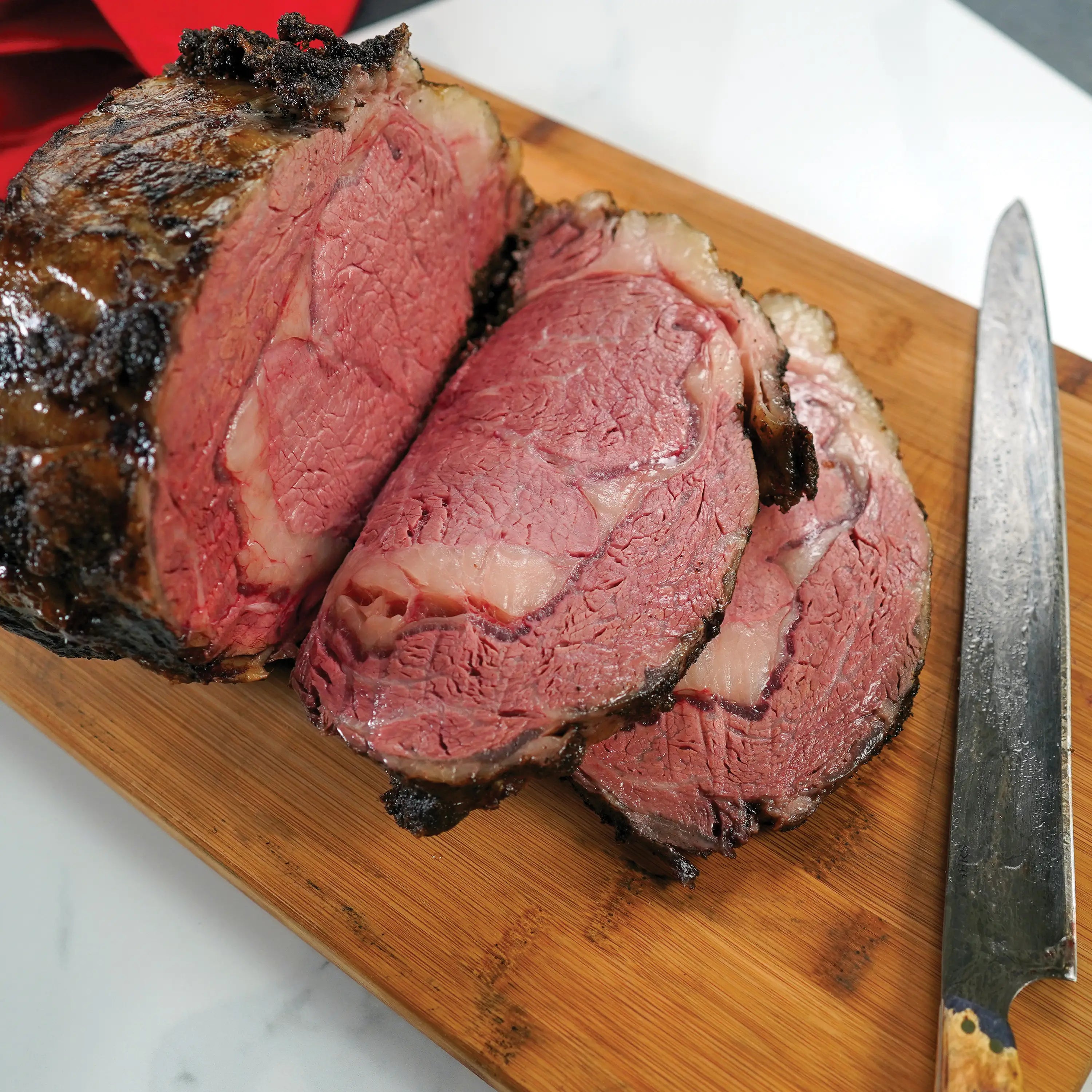
Prime Rib vs. Ribeye: Understanding the Differences Between Two Classic Cuts of Beef
There are so many different cuts of steak; it's easy for even the biggest beef aficionado to get confused from time to time. Questions like, “What’s a hanger steak?” and “Is filet mignon better than a NY strip?” are pretty common, but one of the most frequently asked questions in the steak world is this: “Is prime rib the same as ribeye?”
In this guide, Allen Brothers’ team of experts will dig into the age-old prime rib vs. ribeye debate, outlining the differences between these popular cuts and explaining how you can bring home the best cut for your personal preferences and culinary plans.
What is Prime Rib?
When it comes to beef, the term "prime rib" can often be confusing. Despite its name, "prime rib" refers to the specific cut of meat taken from the cow’s primal rib section, not the USDA Prime beef grade. The USDA grading system—Prime, Choice, and Select—evaluates beef based on its marbling (the fat interspersed within the meat) and the age of the animal, which directly influence tenderness, juiciness, and flavor. This primal cut can be located behind the animal’s shoulder but in front of the lower back/butt region.
Prime rib is prized for its tender, juicy texture and incredible deep, rich, and beefy flavor. Among the different grades of beef, USDA Prime is the highest grade, known for its abundant marbling and exceptional quality, making it the top choice for those seeking a luxurious dining experience. USDA Choice offers slightly less marbling but still delivers a flavorful, high-quality cut. USDA Select, while leaner, is typically less tender and flavorful than the other two grades. Always look for the USDA designation and stamp on your rib roast if that’s what you prefer to purchase.
Looking for the highest quality? A USDA Prime bone-in rib roast, like the ones sold by Allen Brothers, typically includes the front part of the ribs numbered six through 12. It’s packaged and sold whole, meaning it includes the ribeye, rib cap, and rib end as a single unit rather than being butchered into smaller parts to be purchased and cooked separately.
What is a Ribeye Steak?
Ribeye steak is an immensely popular and tasty cut that comes from the beef rib primal between the cows' sixth and twelfth ribs. This piece of beef is typically sliced and sized for individual consumption, though there are also larger ribeye cuts, like a tomahawk steak, that are considerably larger and more dramatic and therefore perfect for splitting between a couple of people on a special occasion.
Ribeyes may be cut and sold on or off the rib. The steak itself can be divided into three separate yet connected parts: the longissimus dorsi (aka the heart or eye), the spinalis (aka the ribeye cap), and the complexus (a smaller section that may not be present in steaks with a larger longissimus dorsi section).
Comparing the Similarities of Prime Rib and Ribeye Steaks
The biggest common ground shared by prime rib and ribeye steaks is that they both come from the exact same part of the cow. Prime rib is simply a bigger, less-processed section of the cow’s primal rib, while a ribeye is a piece of that rib section sliced into a smaller portion.
Both cuts also share a reputation for being utterly delicious. The rib primal is tucked into an area of the cow that doesn’t do much work. The texture and flavor of beef often depends on whether the muscle has been working hard or if it’s just along for the ride—hard-working muscle translates into tougher, leaner meat. Lucky for us, the meat here is so stabilized by the cow’s ribs that it doesn’t move much at all, creating the perfect foundation for a fatty, fork-tender result well worth bragging about.
The Main Differences Between Prime Rib and Ribeye Steaks
While both prime rib and ribeye steaks come from the same area of the cow, there are some definite differences between the two cuts of beef.
Differences in Cooking Methods
There are a variety of cooking methods for steak, but not all of them apply to prime rib. It’s also worth mentioning that cook time can vary depending on the cooking method and desired doneness.
Generally speaking, the best way to cook prime rib is to season it liberally and then roast it whole until it hits the desired internal temperature for doneness according to your meat thermometer. You can also grill your prime rib, which will give it a smokier flavor and help produce a crustier exterior versus oven cooking alone.
Prime rib needs to be seasoned heavily so that all your added flavoring agents can penetrate the entirety of the meat. You can keep things simple with just salt, pepper, and some garlic, or use a specialty rub that includes other aromatics—thyme, rosemary, mustard powder, and smoked paprika are just a few options worth trying out.
Ribeye steaks can be grilled, pan fried in a cast-iron skillet, broiled, and even cooked sous vide. There are so many ways to season a ribeye, ranging from a simple yet generous application of salt and pepper to complex marinades designed to infuse the meat with southwest or Asian flavors.
Cooking style is one of the easiest ways to distinguish prime rib from ribeye. Prime rib roasts are always cooked whole at low heat, resulting in a tender texture, and then sliced for serving. On the other hand, ribeye is sliced first and then cooked, typically grilled or seared over high heat for a deliciously charred flavor.
Understanding the Flavor Differences
Prime rib and ribeye steaks come from the same part of the cow and are technically the same pieces of meat, so their base flavor is pretty much identical. Think rich, buttery, and beefy with plenty of marbling. But differences in how each cut is cooked can significantly influence their final flavor profiles. As mentioned, prime rib is cooked low and slow, resulting in a tender texture, while ribeye is seared over high heat, creating a charred, robust flavor.
There’s also the matter of how much bone and fat remain intact after processing and before cooking. Bone-in beef cuts tend to be more intense, and there is a lot of flavor and moisture that comes from fat as well. Prime rib typically contains more beef and fat, though bone-in ribeyes are hardly lacking. Bone-in versions of both cuts enhance the taste of the meat closest to the rib bone.
Distinct Textures and Tenderness
The texture and tenderness of prime rib and ribeye are significantly influenced by their cooking methods. Prime rib, cooked low and slow, develops a buttery, melt-in-your-mouth texture that's perfect for those who enjoy tender, juicy cuts of beef. This slow cooking process breaks down connective tissues, resulting in a luxuriously soft bite.
On the other hand, ribeye is typically seared quickly over high heat, creating a firmer, juicier texture with a delightful crispy exterior. The high heat caramelizes the surface of the steak, locking in its juices and enhancing its robust flavor. For those who prefer a slightly chewy, hearty cut with a satisfying char, ribeye is an excellent choice.
Cost of the Ribeye vs. Prime Rib
There are going to be significant cost differences between prime rib and ribeye steaks for several reasons.
First, we have to take into account size, because prime rib roasts are sold whole; they’re a much larger cut than an individual steak and are priced accordingly. But even if you managed the impossible and found a ribeye steak that was the same weight as a rib roast, you’d be paying more for the roast. That’s because the price per pound for prime rib is almost always higher than the price per pound for a ribeye, thanks to limited supply and consistently high demand.
Which Is Better, Prime Rib or Ribeye?
This is really a case of po-tay-toe, po-tah-toe, or toe-may-toe, toh-mah-toe. In other words, there’s no wrong answer. You can argue that prime rib is better for special occasions and those times when you’re interested in cooking top-quality beef for a crowd, while ribeye steaks are more ideal for portion control and a tasty steak dinner on a more restricted budget. But there are times when you might want to cook steaks for a whole crowd of people, and sometimes it’s nice to treat the family to a Sunday rib roast just because.
If you’re trying to decide between purchasing and preparing a prime rib roast or a ribeye steak, ask yourself the following:
How much time do you have? You need exponentially more time to prepare and roast a prime rib versus the mere minutes it takes to grill or pan sear a boneless ribeye.
- What’s your budget? If you’re sticking to a budget, it’s probably easier to do so if you shop for ribeye that’s cut into individual steaks vs. sold as a whole roast.
- How many people are you feeding? The “set it and forget it” nature of a prime rib and its larger size make it a solid choice for the main event of a holiday meal or other big gathering. But you could also cook and slice several ribeye steaks and pair them with a variety of sides or even some seafood for a spread that caters to any number of people.
- How important is the wow factor? It’s hard to beat the jaw-dropping moment when you place a perfectly roasted prime rib on the table, but you can also craft a pretty impressive presentation using a couple of bone-in ribeyes or a tomahawk cut.
- How does everyone like their steak done? When you roast a prime rib, you’re aiming for one temperature—medium-rare to medium, most likely. If you want to cater to a wide range of tastes, for instance, if some guests like their beef rare and some prefer their cuts medium-well, you’re better off cooking individual ribeyes.
Frequently Asked Questions
Why is prime rib so expensive?
Prime rib is comparatively expensive because it’s a highly desirable, highly delectable cut of meat that’s known for being very juicy, flavorful, and tender. It’s also a case of supply and demand—prime rib roasts are much more limited in number, while individually cut ribeye steaks are more plentiful.
Can you cut prime rib into ribeye steaks?
A prime rib can be cut into ribeye steaks. In fact, whether that cut is roasted and served whole or cut into steaks and then cooked forms the primary difference between prime rib and ribeye.
Is prime rib the best cut of steak?
Prime rib is definitely considered one of the best cuts of steak due to its incredible texture and flavor. It’s popular around the holidays, both by top chefs at steakhouses and by home cooks eager to feed their loved ones something special.


